


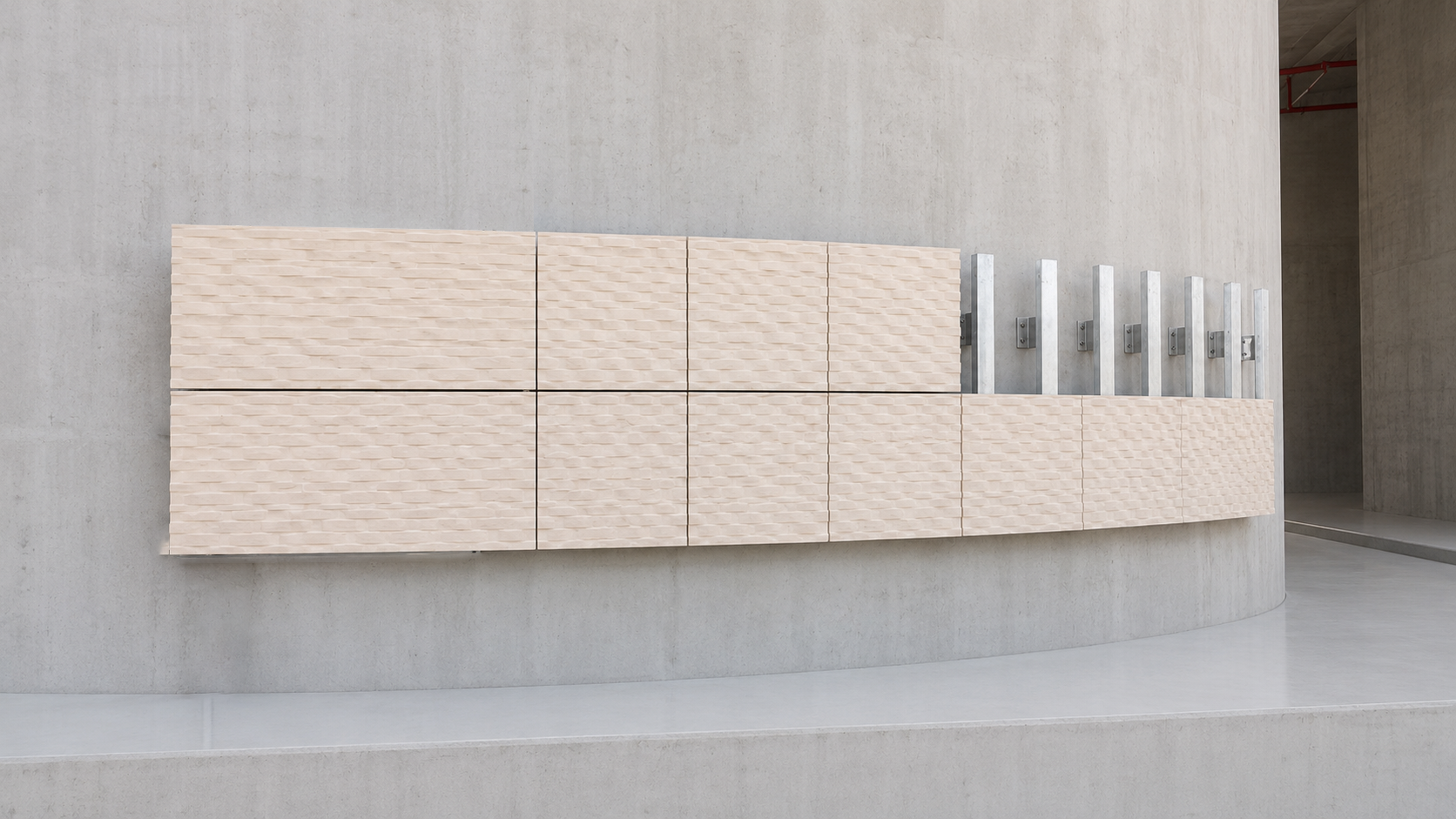
Large stone facade slabs create a premium architectural appearance, but their performance depends entirely on the engineering system behind them.
In modern ventilated facades, large-format stone panels require heavy-duty mechanical support systems capable of handling significant dead loads, wind pressure, thermal movement, and long-term structural stability. This is where heavy T-channel facade systems become critical.
A properly engineered heavy channel system transfers the load of the stone slabs safely back into the concrete structure through adjustable brackets and mechanically fixed support points. The stone itself is not suspended by adhesive; instead, each slab sits securely on specially designed support clips that distribute the load across the vertical structural rail.
This approach delivers several major engineering advantages:
- Reduced structural deflection
- Higher load capacity for large stone slabs
- Improved wind and seismic resistance
- Better panel alignment and installation accuracy
- Long-term facade durability
Deflection control is especially important in Saudi Arabia and Jordan, where high temperatures create continuous thermal expansion and contraction cycles. Without a rigid and properly designed support system, large stone panels can crack, shift, or fail over time.
Heavy-duty T-channel systems also improve installation efficiency by creating a stable structural framework that allows accurate panel positioning while maintaining the required ventilated cavity behind the facade.
For high-rise developments, luxury villas, hospitality projects, and premium commercial buildings across Riyadh, Jeddah, Amman, and the wider MENA region, engineered mechanical facade systems are essential for combining architectural aesthetics with long-term structural performance.
large stone slab facade, heavy channel system facade, mechanical stone fixing system, ventilated stone facade Saudi Arabia, facade engineering Jordan, heavy-duty T-channel facade, structural facade support system
